
TÜV AUSTRIA Trusted AI · Model audit completed

The defect is already in your data. You just can't see it.

Out of hundreds of thousands of readings per day, a ten-minute anomaly goes unnoticed — and ends up as a complaint from your customer. The trace is in the data you already have. You see it before it gets expensive.

For electroplating and anodizing shops with multiple lines — at one site or across several plants.

30 minutes · no obligation · free

See what's possible first — all services at a glance →

Stefan Maier — your contact
Your contact
Stefan Maier
Master electroplater · Materials physicist
Lean manager
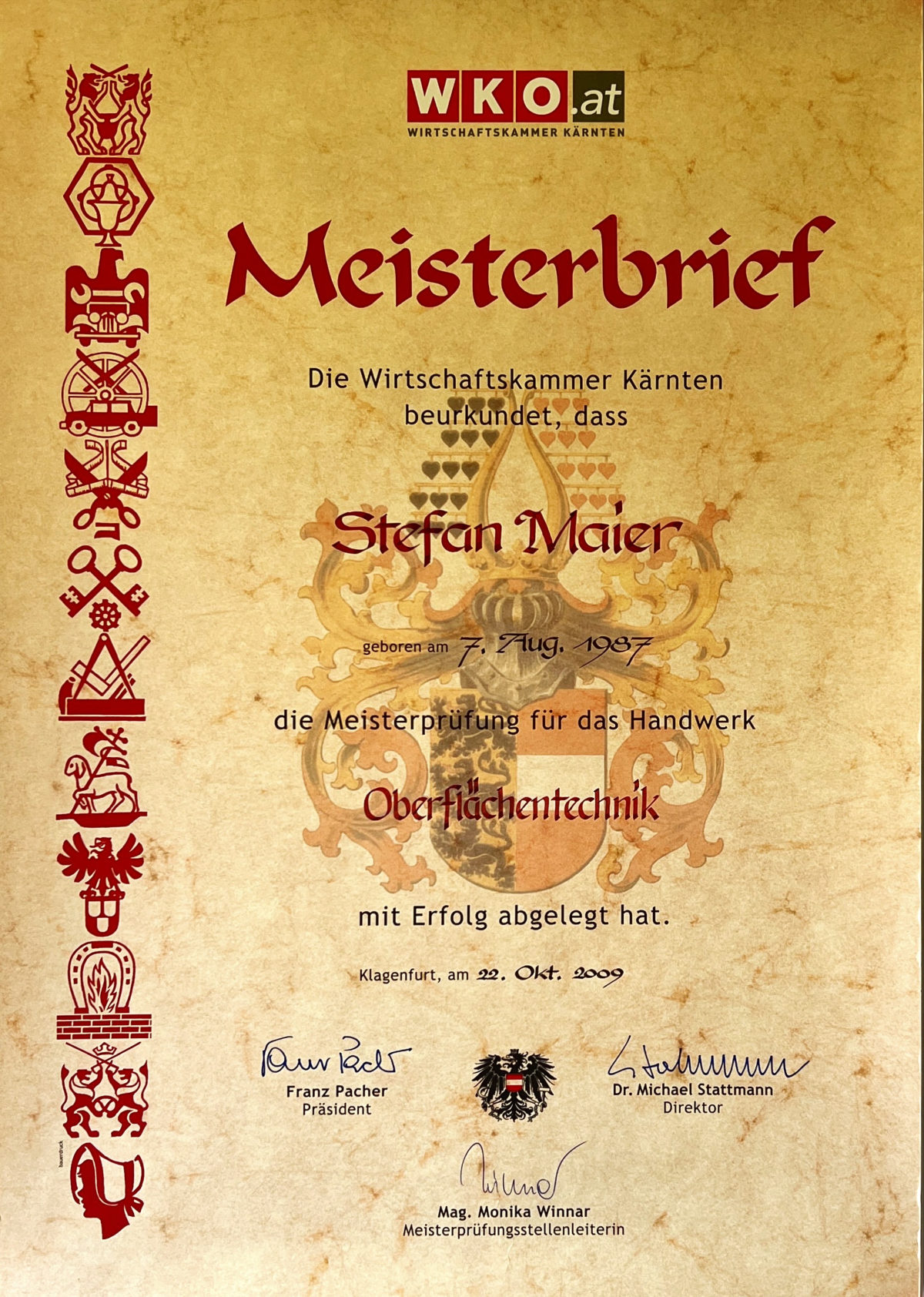
Master craftsman diploma of Stefan Maier, surface finishing, WKO Carinthia Master craftsman business WKO Carinthia · View diploma

Independently audited — transparent instead of a black box

The method was independently audited by TÜV AUSTRIA (Trusted AI, model audit 2026). For every alert, you see which sensors are behind it and why it was flagged.

The key question for any AI system: does it find the one real anomaly — or does it mostly produce false alarms? The audit gives the answer:

8 out of 10
real defects detected in the TÜV audit
under 5%
false alarms in the audit — every alert stays verifiable
aws Austria Wirtschaftsservice Funded by aws Deep Tech
Startup Vorarlberg Startup Vorarlberg program
Over 20 years in electroplating
TRUSTIFAI by TÜV AUSTRIA Group Audited · EU AI Act · NIS2

Why plating shops rely on data instead of gut feeling

Video in German.

Prefer to browse at your own pace? View the company presentation (PDF, German)

Prefer to see the application itself? How your process data is analyzed (5 min, in German)

What's happening now

In the press August 6, 2026
Vorarlberger Nachrichten · VOL.AT

“Alberschwende engineer develops inspection software that keeps getting better with AI”

“Often every single value is in the green — only their combination can lead to quality problems.”

The article describes how the analysis boils millions of readings down to a few meaningful leads — and that the first pilot project has been successfully completed.

Article by Andreas Scalet, Vorarlberger Nachrichten — published August 6, 2026, also on VOL.AT.
Read the profile (wisto.at, in German) All publications
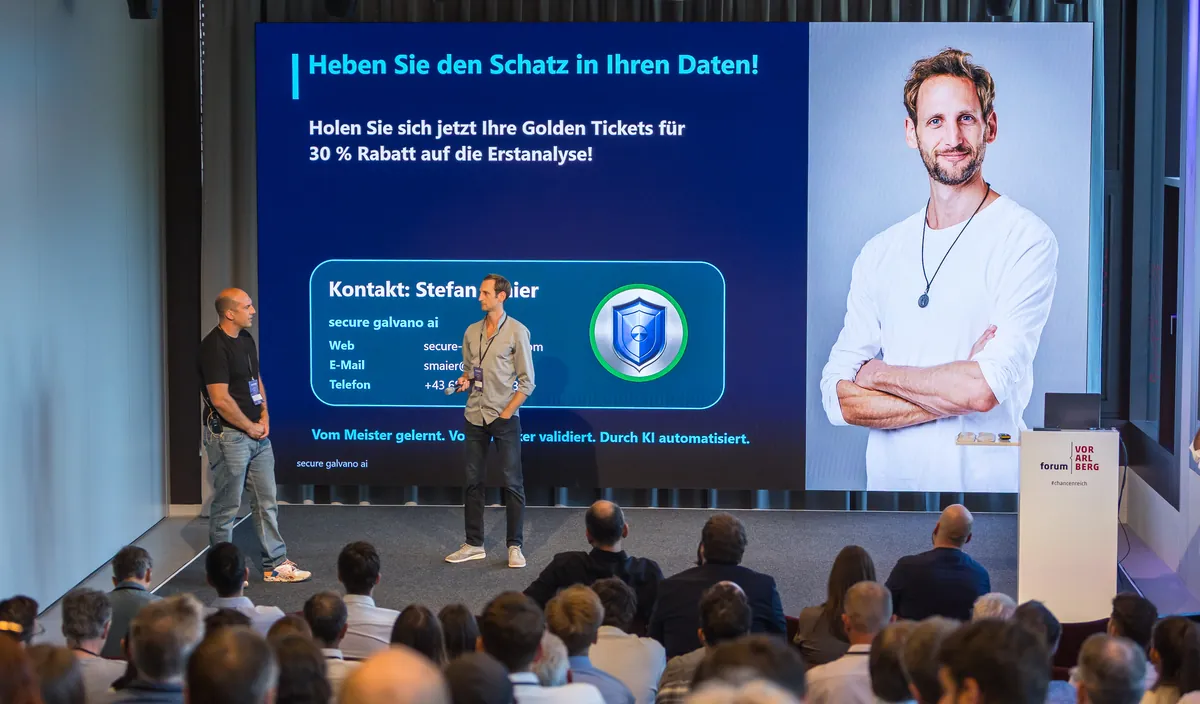
Stefan Maier giving a talk at KI Days Vorarlberg 2026 at forum Vorarlberg, Campus V Dornbirn
Looking back September 29, 2026
KI Days Vorarlberg · Campus V, Dornbirn

Learned from the master, automated by AI

On stage at KI Days: how existing process data turns into a root cause analysis — and why the method from electroplating carries over to any kind of manufacturing.

15 minutes on your data

Photo: Mike Siblik / KI Days Vorarlberg

“In the medium term, the start-up wants to work with just a few companies this way — deliberately in depth rather than in breadth.”

Vorarlberger Nachrichten · VOL.AT, August 6, 2026

That is the working model: a plating shop grows over decades. Together with the shop, we anchor the software where it brings the most value and extend it line by line. That only works with a few shops at a time.

The customer complaint arrives — and nobody knows what caused it

The suspect batch has long since shipped by the time anyone notices the deviation — and what it costs only becomes clear when it is too late. The pattern was in your measurement data all along.

5 figures
One customer complaint
6 figures
One lost key account
7 figures
One recall

Step in before the scrap is made.

One path, not a toolkit. It starts by finding the cause in the data you already have — and ends where you react before a deviation even occurs. The industry calls this Predictive Quality.

1 · Find the cause
In the data you already record. No intervention in production.
2 · See it live
Spot anomalies while the parts are still in your shop.
3 · React ahead of time
Ahead of the disturbance instead of behind it — before any scrap is made.

Your monitoring checks each reading on its own: temperature too high, alarm. That is exactly where it fails in the expensive cases. Because often every single value is in the green — and the combination is still wrong. The current a little lower, the bath a little cooler, the parts in a little longer. Unremarkable on their own, a defect together. That interplay is what we read.

“Not: something is wrong somewhere. But: at this point on the line, in this time window — look there first.”

What this means for you: How far it goes in your case depends on your data. Step 1 shows what your data can support.

Your line doesn't have to be new.

Whether your values come from the controls, from the rectifier or by hand from the bath log — we analyze what is already being recorded today. Even on a line that has been running for twenty years, where every source writes its own format.

Read as it is
Rectifier archives, alarm messages, lab values, bath log — no new sensors.
Put on one timeline
Different sources in one picture, without needing the maker of your controls to get involved.
No retrofit
No wiring, no access to the controls, no downtime.

Analyze what is there first, then decide where to invest. That way, before a modernization, you know which line it pays off on — and which it doesn't.

How the Site Assessment reads your existing setup

Four steps — you know up front what each one costs.

Fixed price, fixed result, no commitment: you order each step on its own and decide again after each one. The intro call costs you nothing.

Step 1 · free

Intro call

30 minutes. You describe your situation and get an honest assessment — even if it says the numbers don't work yet.

free 30 minutes

Step 2 · before any data moves

NDA

Signed before a single file leaves your building — mutual, three years of confidentiality. Your process data does not go through any outside AI service.

Read our NDA in advance (PDF, German)

Step 3 · one day on site

Site Assessment

The map of your site: which lines deliver which data and where the biggest levers are — evaluated with your own numbers.

€1,500 net (excl. VAT) per site

Step 4 · if the data supports it

Feasibility Project

One selected use case is tested on your readings until there is documented proof — more use cases can be added at any time.

€5,000 net (excl. VAT) per use case

Process, effort and results in detail Sample report (PDF, German)
Start with the intro call

And after that? Implementation is costed by effort and agreed as a fixed price before you commit — the target is annual savings of three to four times the investment. For reference: across energy, water, anode metal, chemicals and disposal, the savings potential per line and year is on the order of €60,000 to €130,000. What happens next

Have it done

You want to know what is in your data without putting in your own time. We analyze, you get the findings.

View the Site Assessment

Do it in-house

Your specialists build their own analysis tools — with AI support, no programming skills needed. What they build belongs to your company, source code included, and your people keep developing it.

View the Data Workshop (in German)

On-premises data processing

Out of several hundred measuring points and half a million signals, what remains is what matters — the few alerts with a real cause. The decision stays with your engineer: the AI points to the lead, the call is yours.

✓ On-premises on isolated hardware — no AI cloud, encrypted handover.
✓ No intervention in the line, no new wiring.
✓ The data you already record is enough — no extra measuring effort.
✓ NDA before a single reading leaves your building.
✓ The results belong to you — report and click-through demo, full access, no lock-in.
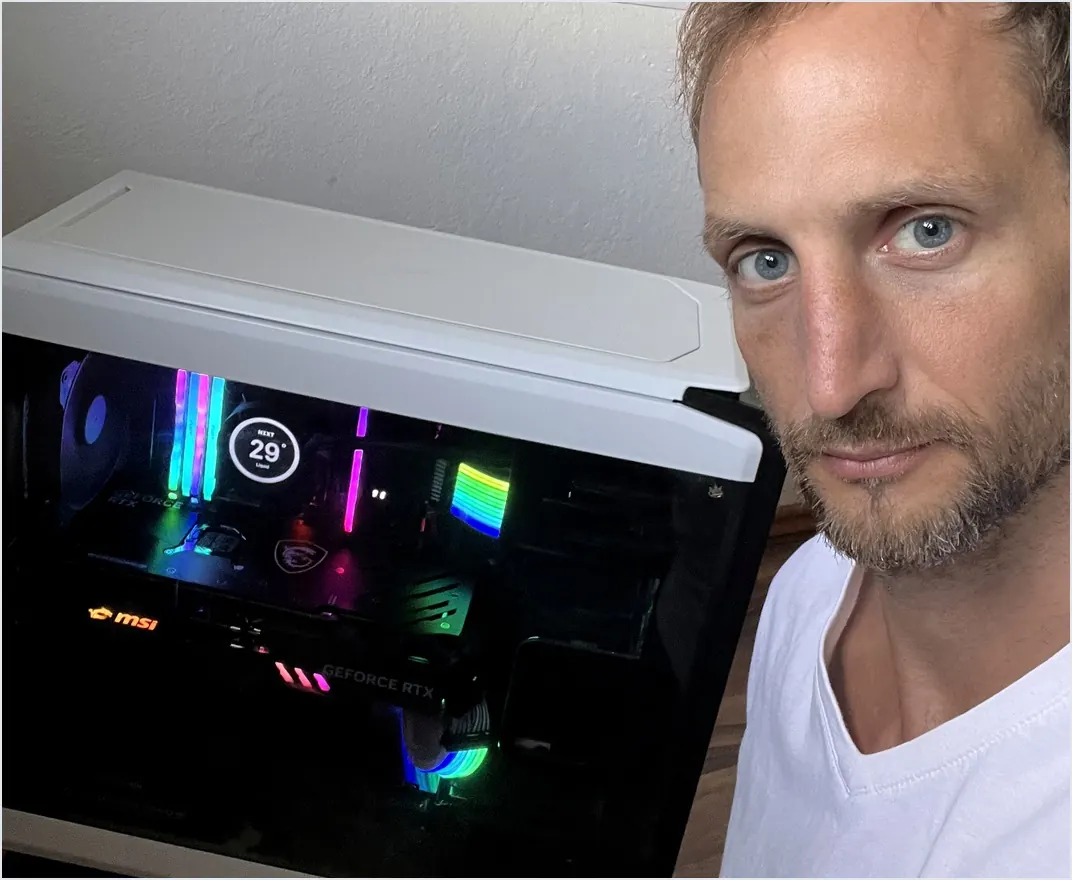
Stefan Maier next to the workstation the analysis runs on
The development machine, August 2026.

This is where your data gets analyzed

A dedicated machine in an access-controlled workroom, not reachable from the internet — no third-party data center. After the project ends, your data is fully deleted on request, with written confirmation.

This machine is the development environment, not a hosting service: the finished system then runs on your own infrastructure, with a fraction of this computing power. The development is what takes the effort, not the operation.

The audits and standards behind it
What data do you need — and what if our data isn't ideal?

What you already record: sensor logs, SCADA history, Excel records, lab reports, customer complaint reports. 3–12 months of history is a good start. Gaps, mixed formats and time offsets are the rule, not the exception — that gets cleaned up. Where your data can't answer a question, you get a clear statement saying so.

What if the cause can't be pinned down clearly?

Usually the main causes become clearly visible. In the difficult cases you still get a solid interim result: which hypotheses the data supports and which are ruled out, plus a proposal for the targeted additional measurement that settles the open question. Either way, you have more clarity than before.

We have several sites. How does that work?

It starts at one site — that one carries the analysis. Every additional site costs significantly less, because the method is in place and nothing has to be developed from scratch. Billing is per monitored line, and you decide site by site.

Let's talk about what's in your data.

30 minutes, free, and no preparation needed on your side. Prefer to write first? Describe your situation by email — you get a solid assessment of whether the first step is worth it for you.

Schedule an intro call ✉ Describe your situation by email

The email opens pre-filled — you only add your details. You usually get a reply within one business day.

Master craftsman diploma of Stefan Maier — surface finishing, WKO Carinthia 2009
Master craftsman diploma · Surface finishing · WKO Carinthia 2009 · open as PDF (German)
Book a free intro call